
Your needs, this model
Does it fit your priorities?
Will the BMC800 heat two pans at once?
No. The exact product image and instructions show one cooking zone. If two simultaneous pans are essential, choose a documented dual-zone cooker rather than expecting the one-zone Control Freak Home to act like two burners.
Explore this need in the finder →Does the included probe replace the pan-temperature sensor?
No. Pan Control uses the through-glass sensor to track the pan; the wired probe can monitor food or control liquid temperature. If an essential plan requires both an included probe and a separate pan-temperature mode, this exact model documents both.
Explore this need in the finder →Does the exact BMC800 documentation confirm a 480°F pan setpoint?
Yes for Pan Temperature: both model-specific instruction-book editions list a selectable 482°F Stir Fry setting, and Breville’s product description also states a 482°F ceiling. The embedded Settings property on that page says 428°F, so retain that source conflict; Probe Control is a different mode capped at 392°F.
Explore this need in the finder →Will the BMC800 confirm a required small magnetic pan base?
Not from the inspected manual. It gives a minimum pan diameter of 5.5 inches but does not identify the minimum as the magnetic flat base measured by this question.
Explore this need in the finder →What makes the BMC800 different from a basic portable burner?
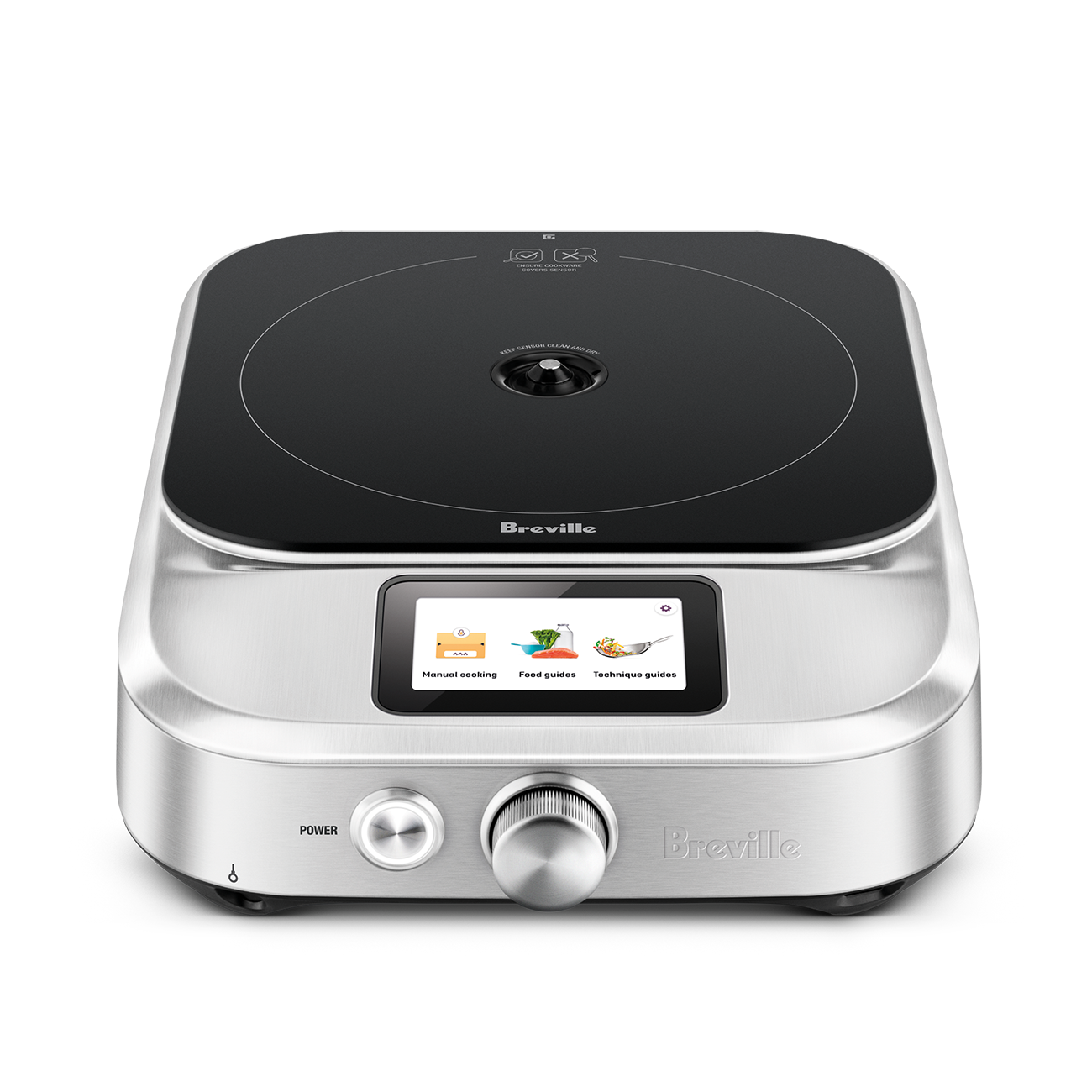
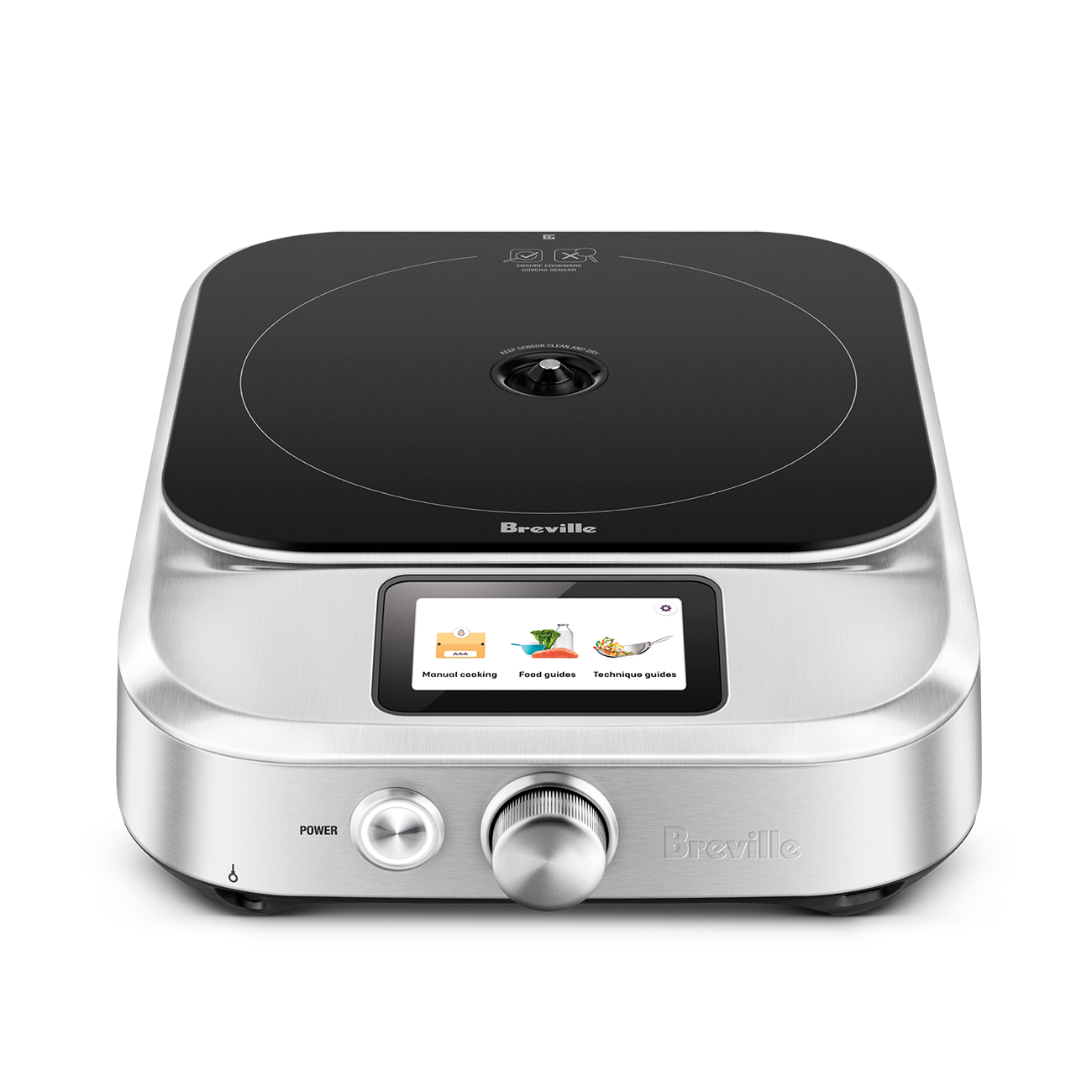
Breville’s Control Freak Home BMC800 is a single-zone countertop induction cooker built around temperature feedback rather than a short list of heat presets. Its under-glass sensor measures the cooking pan, and the maker says the sensor samples 20 times per second. The interface lets you set a pan temperature, adjust heat intensity, use ingredient and technique guides, and save multi-step custom presets. An included wired probe adds a second, different way to work: it can read food temperature or control liquid temperature. That combination is unusually capable for a portable one-pan unit, but it also makes this a substantial countertop appliance rather than a light emergency hotplate.
Pan control and probe control solve different problems
Pan Control is the more distinctive everyday feature. Instead of asking you to infer pan heat from a numbered watt setting, the cooker senses the pan surface through the glass and targets a chosen temperature. That can help with recipes where the pan itself should stay within a narrower band: melting, gentle simmering, tempering, or holding a controlled fry temperature. The setpoint is not a food thermometer reading. Its usefulness depends on a clean, flat, induction-compatible pan making proper contact with the central sensor. Breville warns that concave or convex cookware will not let the sensor work correctly.
The probe is not a substitute for Pan Control. In thermometer mode it can monitor a solid item’s core temperature; Probe Control can regulate liquid around the probe, including water-based or oil-based cooking. The manual treats those liquid modes separately and caps Probe Control at 392°F. For a whole steak, the probe tells you about its interior; for a pan-fried egg, the under-glass sensor is the relevant temperature feedback. Ask which measurement you actually need before choosing a probe-equipped cooker.
A documented high pan setting, with one contradictory specification field
Breville describes a 77–482°F range, and both exact BMC800 manuals list 482°F as a selectable Stir Fry setting. The model therefore supports a 480°F Pan Temperature requirement. But the same product page’s embedded Settings field says 428°F, an unexplained internal conflict; confirm the supplied unit if the exact ceiling is critical. Probe Control is separate and capped at 392°F.
Likewise, no reviewed source gives a temperature step size or a selectable wattage ladder. The page lists 1,800 W, but that is not proof of a lowest-watt setting or a particular number of power steps. The high/medium/low intensity control changes the speed of heating toward a setpoint; it should not be mistaken for documented 100 W or 200 W low-power modes.
Cookware fit is precise—and not universal
The BMC800 needs magnetic, induction-compatible cookware. Its instructions say the pan should have a smooth, clean, flat bottom, touch the sensor and be at least 5.5 inches in diameter; for even heating, they recommend a base no larger than 10 inches. Do not read those pan-diameter instructions as a confirmed minimum magnetic-base measurement. The maker does not specify the smallest flat magnetic base in that form, so a tiny pan is not a match the finder can promise. The manual also limits the combined pot and contents to 13 pounds. A heavy Dutch oven plus a full batch could therefore be a poor setup even when the cookware is magnetic.
This is one zone, so two pots cannot heat simultaneously. It is a fit for one deliberate cooking task at a time, not a replacement for a two-burner counter unit when dinner depends on parallel pans. The maker lists a 12.2-by-16.9-by-4.1-inch body and 15.37-pound weight. It can be moved after it has cooled and the pan is removed, but measure the storage shelf and counter first.
Plan for the outlet, space, and cleanup
Breville lists 1,800 W and 110–120 V; its US instruction book calls for a grounded 120 V, 60 Hz supply with a 15–20 A fuse or breaker and recommends a dedicated circuit. That is a reason to check the actual kitchen circuit rather than assume any shared outlet is suitable. The manual says to keep at least 8 inches from walls and heat-sensitive materials in its safety section, while its setup section gives a smaller 10 cm clearance. Use the more conservative 8-inch distance unless Breville confirms the exact placement for your unit. This is household indoor equipment, not an outdoor, vehicle, or RV workaround.
The wide glass panel and the sensor both need to stay clean and dry for the intended control. After cooking, the pan heats the ceramic surface, and the fan must finish cooling before the cooker is unplugged and put away. The manual recommends a soft damp cloth and mild detergent, not immersion or abrasive pads. The 2-year limited warranty is listed in the instruction book; confirm current terms and eligibility for the exact seller and date.
Who should shortlist it, and when to choose something simpler?
The BMC800 makes sense when the plan is one magnetic pan, repeatable pan-temperature control, a wired food/liquid probe, and custom guided cooking—and when the size, weight, electrical instructions, and high-end temperature conflict are acceptable. It is a poor choice if you need two simultaneous zones, a confirmed small magnetic-base minimum, a published low-watt step, a long documented countdown limit, or a setpoint above the documented 482°F pan target.
For a more conventional power/temperature/timer arrangement, compare the Duxtop 9600LS or 9610LS. For an included probe without the BMC800’s more extensive pan-sensing workflow, the Nuwave PIC Titanium and the SMEG PIC11 US variants are different options; neither should be treated as equivalent to the Breville’s under-glass pan control. Breville’s larger CMC850 is the commercial Control Freak, not the home model recommended here. Its family comparison is useful for understanding the distinction, but it stays outside this household buying shortlist.
Key details at a glance
| Simultaneous cooking zones | 1 |
|---|---|
| Built-in installation documented | No |
| Documented placement options | countertop |
| Maximum listed power | 1800 W |
| Included wired food probe | Yes |
| Target Hold mode range maximum | 392 °F |
| Body depth | 16.9 in |
| Body width | 12.2 in |
| Body height | 4.1 in |
| Listed unit weight | 15.37 lb |
| Listed voltage | 120 V |
| Listed manufacturer's warranty term | 2 year |
| Dedicated Keep Warm shortcut | No |
| Temperature Mode minimum | 77 °F |
| Temperature Mode maximum | 482 °F |
| Keep Warm shortcut target | 140 °F |
| Keep Warm shortcut duration | 240 minutes |
| Listed supply voltage | 120 V |
| Listed unit weight | 15.37 lb |
| Cooktop finish | Silver |
| Shared output between zones | No |
| Maximum combined power across active zones | 1800 W |
| Independent maximum wattage on both zones | No |
| Zone heating technologies | induction |
Use the exact model’s instructions for operating limits, supplied equipment and version differences.
Paper, software and setup details
Probe and temperature distinction
The exact product page lists an included temperature probe, pot clip and storage box. The manual describes thermometer mode and probe control for liquid ingredients. It caps probe control at 392°F; that is not the cooktop pan-control range.
Cookware fit and manual discrepancy
The exact BMC800 manual requires induction-compatible cookware with a smooth, clean, flat bottom touching the sensor; pans smaller than 5.5 inches may not work, and a base no larger than 10 inches is recommended for even heating. The manual does not identify that minimum as a magnetic-base diameter. Pot plus contents must not exceed 13 lb.
Electrical and placement note
The page lists 1,800 W and 110–120 V. The US instruction book specifies 120 V/60 Hz and a 15–20 A supply and recommends a dedicated circuit. It does not give one exact draw amperage or cord length. Verify the outlet/circuit and nameplate; do not infer suitability from wattage alone.
Manual-version differences
The current product page links an exact-cover 68-page BMC800 K24 instruction book. An additional exact-model 68-page BMC800 J24 edition from Breville’s own asset domain was archived and inspected; both list 482°F as the Stir Fry reference setting. The exact product page’s embedded Settings property still says 428°F, so its page-level content remains internally inconsistent; a named 482°F pan setpoint is nevertheless directly documented in the model-specific manuals. The safety section calls for 8-inch clearance; the setup section says 10 cm. No exact timer maximum was found.
Warranty start and exclusions note
The instruction book states a two-year limited product warranty; confirm the current terms for the exact seller and purchase date.
Sources for this assessment
Choose for the cooking setup you will use.
Compare exact model controls, zone count, pan fit and operating limits—not only headline wattage.