
Your needs, this model
Does it fit your priorities?
Is one pan at a time enough, or must two pans heat simultaneously?
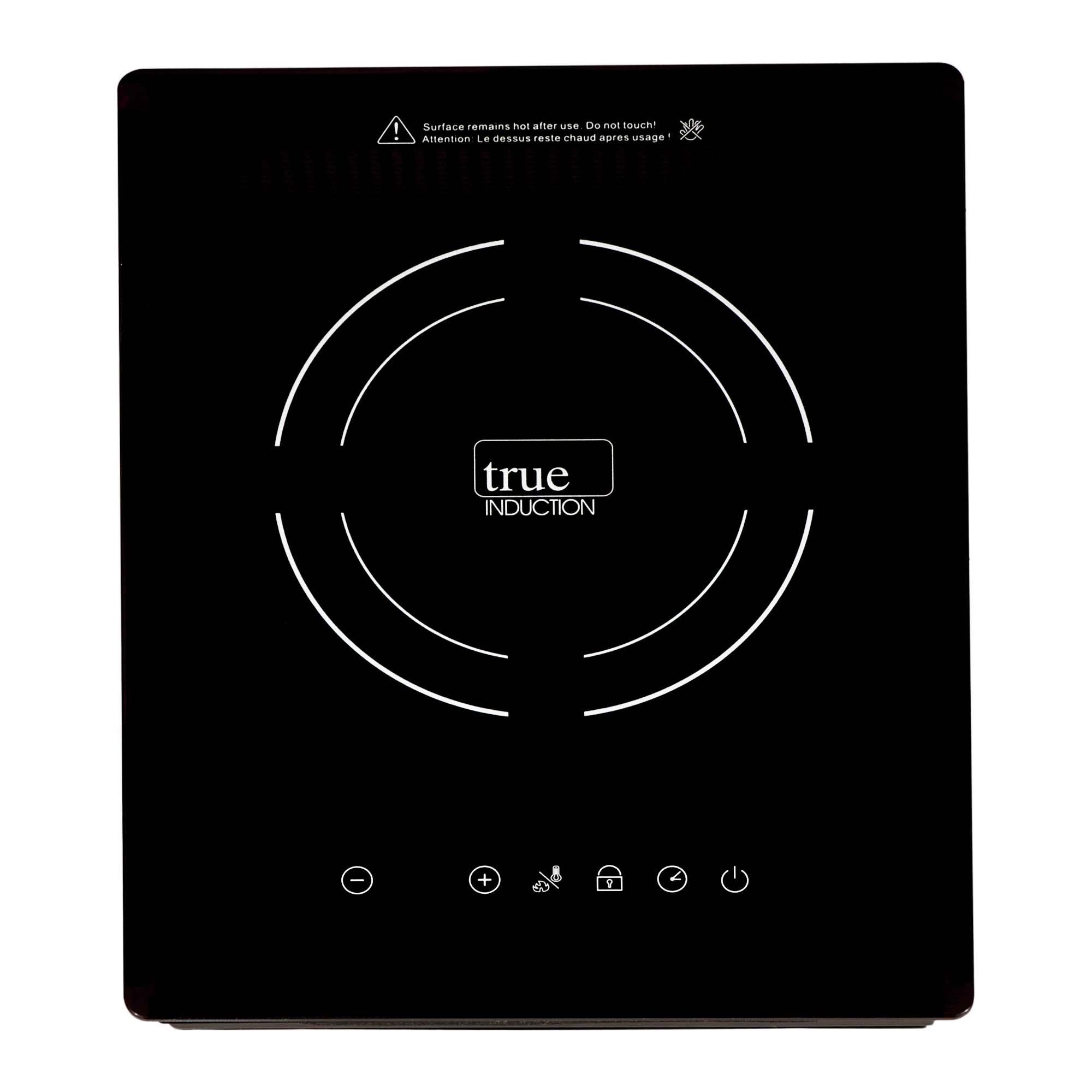
The TI-1B has one induction zone. It suits one-pan cooking and cannot meet an essential two-zone requirement.
Explore this need in the finder →Do you need separate cooktop temperature settings from 150°F through 450°F?
Both linked TI-1B manuals and the exact page specify a separate Temperature mode in that range. The discrete settings are 30°F apart, not continuous.
Explore this need in the finder →Will the documented 150-minute timer limit meet your requirement?
The exact page and both linked manuals list a timer up to 150 minutes. A need for more than 150 minutes is not met; the separate automatic shutoff differs by manual revision.
Explore this need in the finder →Is built-in installation essential rather than a countertop arrangement?
The TI-1B page lists built-in installation and the exact manual gives a cutout and airflow clearances, so it has a separate built-in operating plan.
Explore this need in the finder →The TI-1B is the one-zone member of True Induction’s small household lineup: a 120 V glass-ceramic induction cooker listed at 1,750 W, with a built-in installation option and an explicitly stated countertop option. It suits a small kitchen, kitchenette or second cooking spot where one pan is enough at a time. Its central tradeoff is just that: unlike the TI-2C, TI-2B and MD-2B, the TI-1B cannot keep two pans heating together. A single zone also avoids the power-sharing compromise of those dual-zone models.
One pan, two ways to place the unit
The exact product page identifies model TI-1B and says it can be used for built-in installation or countertop placement. Its specifications list a 12-by-15-by-2¾-inch body, a 120 V/60 Hz supply, 1,750 W, touch controls and residential use. The manufacturer’s FAQ adds that its UL858 built-in models can be used on a counter with the provided rubber feet. That flexibility is useful if a buyer wants a compact surface burner now but may later fit it into a prepared counter.
The installation instructions need more care than the headline implies. The model-labelled 2023 manual is chiefly a cutout manual: it gives an 11⅜-by-13¾-inch opening, at least 2½ inches from a counter edge, and three inches of clearance below for airflow. It does not explain countertop feet in the same detail as the FAQ. The product page supports countertop placement, but before using a particular unit that way, check that its feet and support arrangement are present and that the intake and exhaust can breathe. Do not cut a counter from a listing alone; the manual itself advises checking the unit and site before making an opening.
Temperature settings are not a wattage chart
In Heat mode, the 2023 manual describes ten selectable levels. Its separate Temperature mode lists eleven setpoints: 150, 180, 210, 240, 270, 300, 330, 360, 390, 420 and 450°F. That is a useful choice if you prefer a fixed selection over a heat-level scale, but it is not fine-grained temperature control: the steps are 30°F. The manual does not translate Heat levels into watts, so a shopper who needs a low continuous wattage or a specific watt step cannot infer one from “level 1” or the 1,750 W maximum.
There is a real revision mismatch worth keeping visible. The exact product page and its linked 2023 manual say 1,750 W; the same page also links an older manual labelled 1,800 W. The older manual also differs on the automatic safety shutoff and cookware-size interval. The newer manual says 120 minutes for the safety shutoff, while the older manual says 150; both list a timer up to 150 minutes. The 2023 manual says the timer beeps and returns the cooktop to standby when time expires. Because the exact unit revision in a particular offer is not established here, do not rely on a precise shutdown interval or a disputed rating as a buying requirement. The 150-minute timer is a countdown setting, not a claim that the unit can run continuously for that long.
Measure the pan base, not the rim
Both manuals call for ferromagnetic cookware with a flat bottom. A magnet that holds to the pan base is a quick first check. The 2023 version calls 4.72 to 10.24 inches the optimal flat-pan interval; its earlier linked manual gives 4.5 to 10 inches. Those ranges are close, but they are not identical, and a page-linked older document does not establish which revision is in a particular box. If your smallest pan is near the lower limit or your cookware needs a precise fit, check the manual supplied with that exact TI-1B instead of treating either range as universal. Curved or warped bases can heat unevenly, and the hot glass can remain warm after cooking.
Who should choose it—and who should not
Choose the TI-1B if you need one induction zone on a 120 V connection, value the choice between countertop use and a compact built-in opening, and can cook in sequence rather than in two pans at once. The manual includes a child lock and automatic safety functions; it also says the cooling fan may continue after cooking, so a quiet or immediate-shutoff requirement is not established. The product page lists a two-year limited warranty, but retailer stock and the terms attached to an individual offer are not verified here.
Choose a dual-zone model instead when simultaneous sides are essential. The TI-2C is the clearly portable two-zone choice, while the TI-2B page describes countertop placement as well as an inset option; both share available output between the zones. The smaller MD-2B also adds a second zone but is still a different two-zone arrangement. None turns one outlet into two independent full-power burners. If your needs are strictly one pan and a simple surface setup, the TI-1B keeps the arrangement compact; if two dishes must be active together, its single ring is the wrong compromise.
Sources: the TI-1B product page, the page-linked 2023 manual and older 1,800 W manual, and the manufacturer’s FAQ on countertop feet and cookware.
Key details at a glance
| Simultaneous cooking zones | 1 |
|---|---|
| Built-in installation documented | Yes |
| Documented placement options | countertop / built_in |
| Maximum listed power | 1750 W |
| Body depth | 15 in |
| Body width | 12 in |
| Body height | 2.75 in |
| Listed voltage | 120 V |
| Listed manufacturer's warranty term | 2 year |
| Temperature Mode minimum | 150 °F |
| Temperature Mode maximum | 450 °F |
| Temperature settings | 11 |
| Countdown timer maximum | 150 min |
| Listed supply voltage | 120 V |
| Cooktop finish | Black |
| Shared output between zones | No |
| Maximum combined power across active zones | 1750 W |
| Left zone maximum when used alone | 1750 W |
| Independent maximum wattage on both zones | No |
| Zone heating technologies | induction |
Use the exact model’s instructions for operating limits, supplied equipment and version differences.
Sources for this assessment
Choose for the cooking setup you will use.
Compare exact model controls, zone count, pan fit and operating limits—not only headline wattage.